EU Publishes 2026 ViDA Work Programme: The Implementation Roadmap to 2035
The European Commission has published its 2026 work programme for VAT in the Digital Age (ViDA), setting out implementation activities for the package adopted in March 2025 — with cross-border digital reporting mandatory from 1 July 2030.
On 22 May 2026, the European Commission published its 2026 work programme for the VAT in the Digital Age (ViDA) package — a practical roadmap for implementation activities over the coming year, building on the implementation strategy first released in September 2025.
ViDA Was Already Adopted — in March 2025
It's worth being precise here: ViDA itself was adopted by the Council on 11 March 2025 and entered into force on 14 April 2025. The 2026 work programme is not a new adoption — it's the Commission's plan for rolling the package out, covering technical standards, member state coordination, and the milestones below.
Confirmed Milestones
| Milestone | Date | Requirement |
| OSS extended to e-charging B2C supplies | 1 Jan 2027 | One Stop Shop scope widened |
| Deemed-supplier rules + Single VAT Registration reforms | 1 Jul 2028 | Platforms (accommodation, transport) become deemed suppliers; mandatory reverse charge for non-established suppliers |
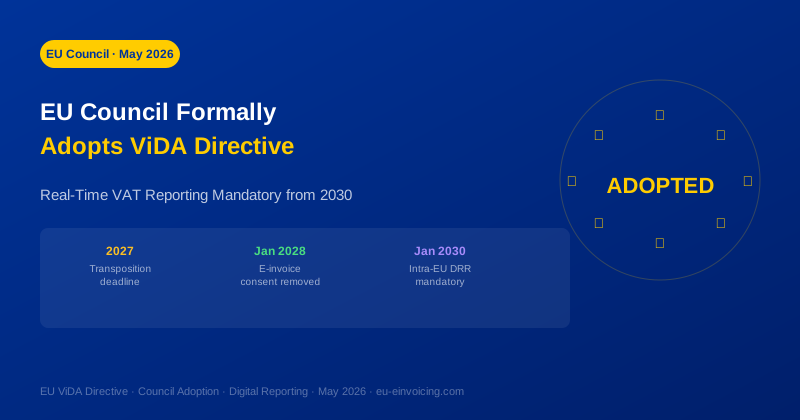
| Cross-border intra-EU Digital Reporting Requirements (DRR) | 1 Jul 2030 | Structured, EN 16931-compliant e-invoicing and digital reporting for intra-EU B2B transactions |
| Domestic system alignment | 1 Jan 2035 | Member states with pre-2024 domestic real-time reporting (Italy, France, Poland) must converge with the EU model |
What Changes Under ViDA
Digital Reporting Requirements (DRR)
From 1 July 2030, intra-EU B2B transactions in scope must be reported to national tax authorities based on a structured e-invoice (EN 16931 compliant), generally within 10 days of the invoice (5 days for self-billing and intra-Community acquisition invoices).
This is in addition to existing national mandates — not a replacement. Germany's XRechnung mandate, Italy's FatturaPA/SDI, France's Factur-X rollout, and Poland's KSeF all remain unchanged; ViDA adds a cross-border reporting layer on top.
Single VAT Registration & Platform Rules
From 1 July 2028, the Single VAT Registration reforms extend the One Stop Shop and introduce deemed-supplier rules for platforms, alongside mandatory reverse charge for supplies by non-established businesses.
Impact on Businesses Currently Preparing for National Mandates
If you are implementing Germany's XRechnung mandate or France's e-invoicing rollout, you are already building infrastructure ViDA will need. The main additional step by 2030 is making sure your e-invoice system can also report cross-border transaction data to your tax authority — not just handle domestic invoicing.
Source
European Commission, Taxation and Customs Union: VAT in the Digital Age 2026 work programme.