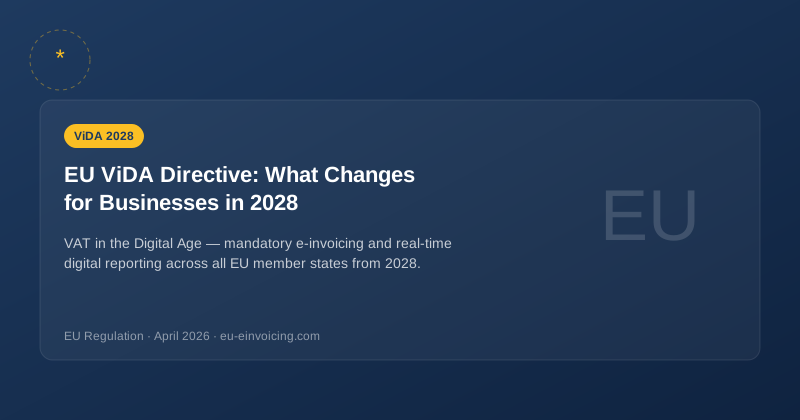
EU ViDA Directive: What Changes for Businesses in 2028
The VAT in the Digital Age (ViDA) package was adopted in March 2025 and rolls out through 2035, with mandatory cross-border digital reporting and e-invoicing from 2030. Here is what to expect.
The European Commission's VAT in the Digital Age (ViDA) package was adopted by the Council on 11 March 2025 and entered into force on 14 April 2025. It introduces three main pillars, rolled out progressively through 2035:
The Three ViDA Pillars
1. Digital Reporting Requirements (DRR)
From 1 July 2030, cross-border intra-EU B2B transactions will require structured e-invoicing (EN 16931 compliant) and digital reporting to national tax authorities — generally within 10 days of the invoice (5 days for self-billing and intra-Community acquisition invoices).
2. E-Invoicing as the Default
For transactions covered by the DRR, ViDA removes the requirement for buyer consent before sending e-invoices — structured e-invoices become the legal default rather than the exception.
3. Single EU VAT Registration & Platform Rules
From 1 July 2028, deemed-supplier rules apply to short-term accommodation and transport platforms, and the Single VAT Registration (SVR) reforms — including mandatory reverse charge for non-established suppliers — take effect.
Timeline
- 2025–2026: Member states with existing mandates (Germany, Italy, France, Poland) continue under their domestic rules — ViDA does not replace them
- 1 July 2028: Platform deemed-supplier rules and Single VAT Registration reforms begin
- 1 July 2030: Cross-border intra-EU Digital Reporting Requirements become mandatory
- 1 January 2035: Member states whose domestic real-time reporting system predates 2024 (Italy, France, Poland) must align it with the EU model
What This Means for Your Business
If you already comply with Germany's XRechnung mandate or Italy's FatturaPA system, you are ahead of the curve — EN 16931-compliant formats already satisfy ViDA's invoicing requirements. The main change by 2030 will be ensuring your system can also report cross-border transaction data to your tax authority, not just handle domestic invoicing.