Estonia's Phased Path to Mandatory B2B E-Invoicing
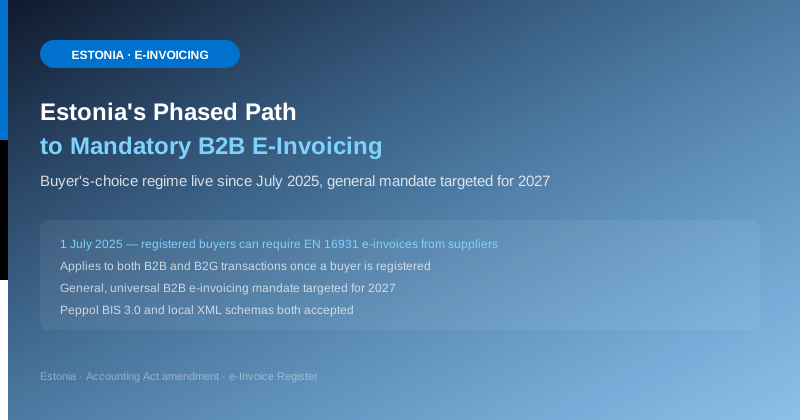
Estonia's 'buyer's-choice' e-invoicing regime has been in force since 1 July 2025, letting any business registered as an e-invoice recipient compel its suppliers to send structured invoices. A general, universal B2B mandate is targeted for 2027 — worth watching for any business trading with Estonian counterparties.
While most EU e-invoicing coverage this year has focused on France, Belgium, and Poland, Estonia has been quietly building its own B2B mandate — through an unusual two-step, buyer-driven model rather than a single hard deadline.
The "Buyer's-Choice" Model, Live Since July 2025
Under amendments to Estonia's Accounting Act, from 1 July 2025 any entity registered as an e-invoice recipient in the Estonian Commercial Register (Äriregister) gained the right to require its suppliers to issue structured, EN 16931-compliant e-invoices instead of PDFs or paper. Once a buyer has registered this preference, the supplier — whether Estonian or a foreign business invoicing an Estonian counterparty — must comply. This mechanism applies to both B2B and B2G transactions and works alongside, rather than replacing, Estonia's existing voluntary e-invoicing infrastructure.
Suppliers are not obligated to issue e-invoices to every customer by default — only once a registered buyer has exercised the right to request them. In practice, this has pushed adoption gradually upward as larger buyers (public bodies and big private-sector purchasers) register and start requiring structured invoices from their supply chains.
What's Accepted
Estonia accepts both the Peppol BIS 3.0 format and its own established local e-invoice XML schema, both aligned with the EN 16931 European semantic standard. Businesses already issuing Peppol invoices for trade with other EU countries do not need a separate Estonia-specific integration.
What Comes Next: A General Mandate Targeted for 2027
The Estonian government has signalled it intends to move from this opt-in, buyer-triggered model to a general, universal B2B e-invoicing mandate covering all VAT-registered businesses by 2027 — removing the option to send paper or unstructured PDF invoices in domestic B2B trade entirely. As of September 2026, this remains a stated policy direction rather than a finalized law with a locked commencement date, so businesses should treat 2027 as a planning horizon rather than a confirmed deadline until further legislation is published.
Why This Matters for Foreign Businesses
If you invoice Estonian companies or public bodies — even without an Estonian establishment — check whether your counterparty has registered as an e-invoice recipient. If they have, you are already obligated to send them structured e-invoices today, not in some future year. This buyer-driven mechanism means the practical mandate can arrive for a given trading relationship well before the general 2027 target.
What Businesses Trading with Estonia Should Do Now
- Check the e-Invoice Register status of your Estonian counterparties before assuming PDF invoices remain acceptable.
- If you already generate Peppol BIS 3.0 invoices for other EU markets, extending that capability to Estonian trading partners is largely a configuration exercise, not a new build.
- Track the 2027 general mandate's progress rather than treating it as confirmed — Estonia has moved incrementally so far, and the final scope and date could still shift.
Source
European Commission, eInvoicing in Estonia; Sovos, Estonia: Mandatory B2B E-invoicing Upon Buyer's Request Approved.