Germany's 2025–2028 E-Invoicing Rollout Explained
Germany's B2B e-invoicing mandate went live in January 2025. Here is the full three-phase timeline: what is mandatory now, what comes in 2027, and what applies from 2028.
Germany's B2B e-invoicing mandate (Wachstumschancengesetz) is the largest rollout of its kind in EU history. Here is a phase-by-phase breakdown.
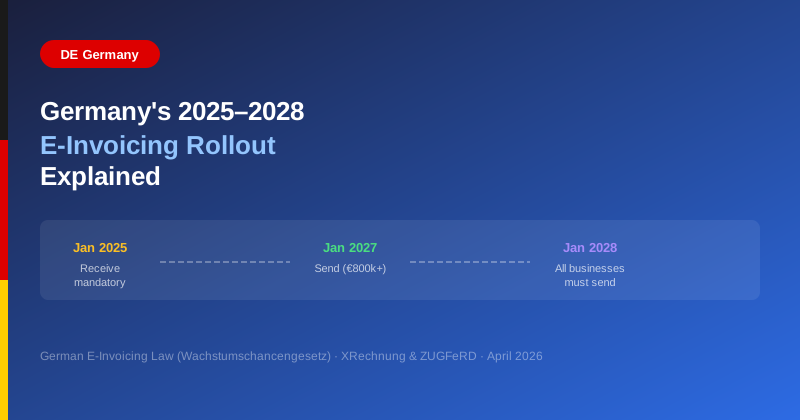
Phase 1: January 2025 — All Businesses Must Be Able to Receive
From 1 January 2025, every German business with a VAT registration must be able to receive structured e-invoices (XRechnung or ZUGFeRD). This means:
- Your accounting software or ERP must support XRechnung and ZUGFeRD formats
- Refusing an e-invoice from a supplier is no longer acceptable
- PDF invoices are still valid for sending (for now)
Phase 2: January 2027 — Large Businesses Must Send
From 1 January 2027, businesses with annual revenue above €800,000 must also actively send e-invoices in structured formats for all domestic B2B transactions.
Phase 3: January 2028 — Everyone Must Send
From 1 January 2028, all German businesses regardless of size must send structured e-invoices. No exceptions.
What Formats Are Valid?
- XRechnung (pure XML, required for B2G)
- ZUGFeRD 2.3 with the "EN 16931" or "XRechnung" profile (hybrid PDF/XML)
- Both must conform to EN 16931 European standard
What You Need to Do Now
1. Verify your accounting software can receive XRechnung and ZUGFeRD
2. Test with a sample invoice using the [KoSIT Validator](https://ecosio.com/en/peppol-and-xml-document-validator/)
3. If your revenue is above €800k, plan your sending implementation for 2027