Poland KSeF Goes Mandatory: Feb 2026 for Large Businesses, April 2026 for All
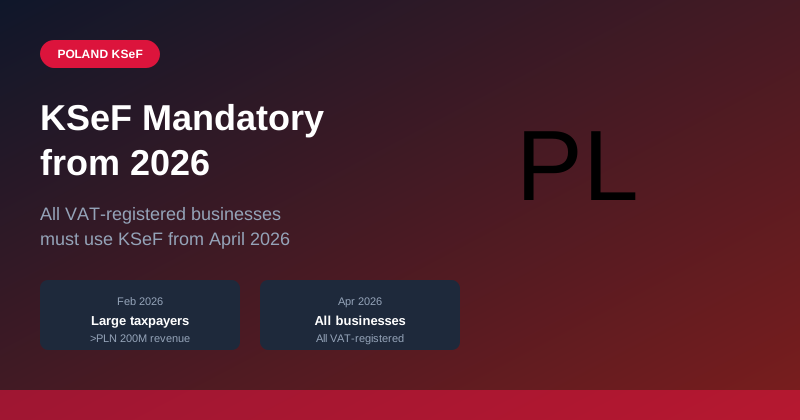
Poland's KSeF e-invoicing system became mandatory on 1 February 2026 for large taxpayers and 1 April 2026 for all VAT-registered businesses. Every domestic B2B invoice now requires a KSeF reference number.
Poland's Krajowy System e-Faktur (KSeF) — the centralised government e-invoicing platform — became mandatory on schedule in early 2026 after the rocky 2024 postponement.
What Changed on 1 February 2026
Large Polish taxpayers with annual turnover exceeding PLN 200 million became required to issue all domestic B2B VAT invoices through KSeF. From this date:
- Paper invoices and PDF invoices no longer have legal standing for VAT deduction purposes for these taxpayers
- Every invoice must pass through the KSeF API and receive a unique KSeF reference number (numer referencyjny KSeF)
- Buyers retrieve invoices from KSeF using the reference number
What Changed on 1 April 2026
The mandate extended to all remaining VAT-registered businesses in Poland. As of 1 April 2026, every Polish business with a VAT number must: 1. Issue domestic B2B invoices only through KSeF 2. Obtain a KSeF reference number for every invoice 3. Retain KSeF records as the primary invoice evidence
Why the Previous Delay Happened
The original mandatory date was July 2024. In January 2024, following a Ministry-commissioned cybersecurity audit, critical vulnerabilities were discovered in the KSeF platform infrastructure. The Ministry of Finance postponed the mandate and undertook a full security overhaul — rewriting significant portions of the infrastructure.
The September 2025 KSeF Act amendments set the new dates of February and April 2026, which were met.
Impact on Polish Businesses
Polish businesses that prepared early reported smooth transitions. The main challenges reported:
- Software configuration: Ensuring the correct FA_VAT 2.0 schema version
- Token management: Securely storing and rotating KSeF authentication tokens
- Offline handling: Building processes for the rare cases when KSeF is temporarily unavailable
What This Means for Foreign Companies
Foreign companies with a Polish VAT number are also subject to KSeF for their domestic Polish B2B transactions. This has been a significant compliance challenge for multinationals with Polish subsidiaries or Polish VAT registrations.