Latvia's B2B E-Invoicing Mandate Is 2028, Not 2026 — Here's the Actual Timeline
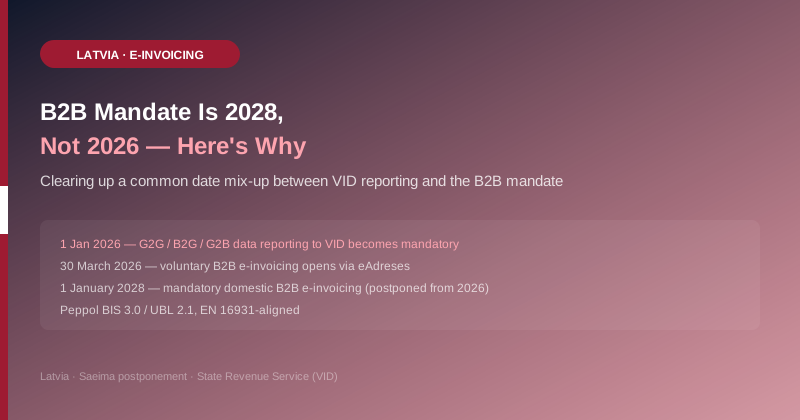
Latvia's general B2B e-invoicing mandate was postponed to 1 January 2028, but only G2G, B2G, and G2B data reporting to the State Revenue Service is mandatory from 2026. Voluntary B2B e-invoice exchange opens 30 March 2026 — worth clarifying given how many explainers still cite 2026 as the B2B deadline.
Latvia is a good example of why a single country can have several different e-invoicing dates in play at once — and why it's easy to conflate them if you don't check which obligation each date actually applies to.
The Mandate That Was Postponed
Latvia's Saeima (parliament) originally targeted a general B2B e-invoicing mandate for 2026, and a number of English-language compliance explainers still repeat that date. That is no longer accurate: in June 2025, the mandatory domestic B2B e-invoicing obligation was postponed to 1 January 2028. If your business trades only with other Latvian businesses, you are not yet required to issue structured e-invoices.
What Actually Starts in 2026
Two separate things are happening in 2026, neither of which is a general B2B mandate:
- From 1 January 2026, the obligation to submit structured e-invoice data to the State Revenue Service (Valsts ieņēmumu dienests, VID) becomes mandatory for G2G, B2G, and G2B transactions — invoicing involving government bodies, not purely private B2B trade.
- From 30 March 2026, the official government e-invoicing platform (the eAdreses system) opens for voluntary B2B invoice exchange, giving businesses that want a head start the chance to begin before the 2028 deadline arrives.
Format Requirements
Invoices exchanged through the mandate — whether the current B2G flows or the eventual 2028 B2B mandate — must use a structured XML format aligned with EN 16931, with Peppol BIS 3.0 and UBL 2.1 cited as accepted formats for suppliers to government bodies.
Why the Confusion Happens
The original law envisioned a faster rollout, and much of the compliance-vendor content written before the June 2025 postponement was never fully updated. Because Latvia now has three distinct dates on the books — 2026 for public-sector data reporting, March 2026 for voluntary B2B onboarding, and 2028 for the mandatory B2B requirement — it's easy for a search result or an older blog post to present the wrong one as "the" deadline.
What Businesses Trading With Latvia Should Do Now
- If you only trade B2B with Latvian companies, your compliance deadline is 1 January 2028, not 2026 — don't let an outdated source push you into a rushed 2026 migration you don't yet need.
- If you invoice Latvian government bodies, the 2026 VID reporting obligation already applies to you and should be treated as live, not upcoming.
- Consider the voluntary eAdreses onboarding from March 2026 if you want to test your e-invoicing workflow ahead of the 2028 deadline rather than migrating everything at once later.
Source
VATupdate, "Latvia Delays Mandatory B2B e-Invoicing to 2028, Voluntary Submissions Start 2026"; European Commission, eInvoicing in Latvia.