Slovakia Joins the Mandate Wave: eFaktúra Becomes Mandatory from 2027
Slovakia will require structured e-invoicing for domestic B2B and B2G transactions from 1 January 2027 via the IS EFA / eFaktúra system, using accredited 'Digital Postman' intermediaries over the Peppol network. A new FAQ published 27 July 2026 clarifies scope and timing.
Slovakia is the latest EU member state to confirm a binding B2B e-invoicing mandate. From 1 January 2027, all VAT-registered taxable persons in Slovakia — including the self-employed and landlords — will be required to issue and receive structured electronic invoices for domestic B2B and B2G transactions (B2C is excluded) through the IS EFA (eFaktúra) system. On 27 July 2026, Slovak authorities published an updated FAQ clarifying scope, formats, and delivery mechanics ahead of the deadline.
How It Works
Slovakia's model is decentralized rather than a single government clearing house:
- Invoices are exchanged as structured XML aligned with EN 16931 — PDFs and scanned images do not qualify
- Delivery runs through accredited intermediaries called "Digital Postmen" (Digitálni Poštári), operating over the Peppol network
- Invoices must be archived in their original XML format for 10 years
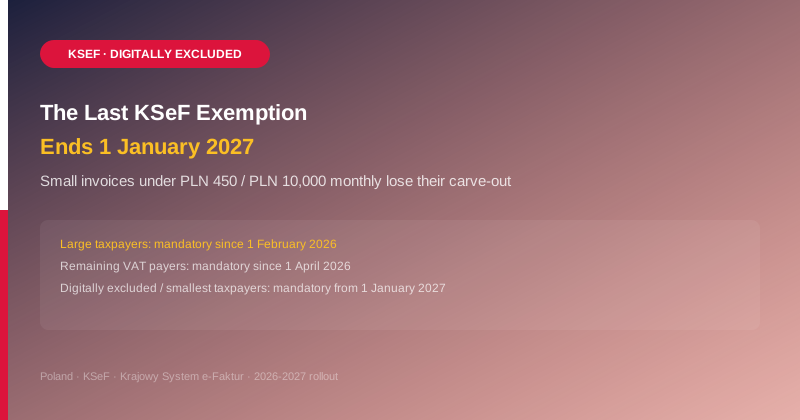
This positions Slovakia closer to Poland's KSeF and Belgium's Peppol model than to Italy's SDI or France's PPF/PA split — no single central portal handles every invoice; certified intermediaries do.
Transitional Period
A voluntary transitional period has been available since 1 January 2026, allowing businesses and their software vendors to test the system ahead of the mandatory 2027 start — a similar soft-launch pattern to what Poland used before KSeF became compulsory.
Why This Matters Beyond Slovakia
For businesses elsewhere in the EU trading with Slovak counterparties, this is a reminder that the "second wave" of B2B mandates (Slovakia, Luxembourg, Belgium's reporting extension, the Netherlands' slower-moving proposal) is arriving on a rolling basis rather than all at once, each with its own network model. A Peppol access point that already serves Belgium or Poland is a reasonable starting point for Slovak readiness, but confirm your provider explicitly supports Slovak Digital Postman routing before assuming compatibility.
What Businesses Trading With Slovakia Should Do Now
- Confirm your VAT-registered status in Slovakia — the mandate applies to VAT payers, including foreign businesses registered there
- Ask your accounting/ERP vendor about EN 16931 and Digital Postman support specifically for Slovakia — generic Peppol support is not automatically sufficient
- Use the voluntary 2026 transition window to test invoice exchange with key Slovak trading partners before the 2027 deadline is enforced
Source
VATupdate, FAQ on Mandatory eInvoicing (eFaktúra) from 1 January 2027; EDICOM, Mandatory Electronic Invoicing in Slovakia in 2027.