Slovakia Advances ViDA Platform-Economy and Import VAT Rules
On 1 September 2026, Slovakia's government approved draft legislation transposing ViDA's platform-economy deemed-supplier rules, call-off stock changes, and import VAT liability provisions — separate from, and not to be confused with, Slovakia's 2027 eFaktúra e-invoicing mandate.
On 1 September 2026, the Slovak government approved draft legislation transposing further elements of the EU's VAT in the Digital Age (ViDA) package into national law — a concrete sign that ViDA's Single VAT Registration and platform-economy pillar is moving from EU directive to domestic statute in one of the smaller member states, well ahead of the EU-wide deadline.
What the Draft Actually Does
The bill transposes Articles 2 to 4 of Council Directive (EU) 2025/516 (part of the ViDA legislative package) together with related EU rules on distance sales of imported goods. Three changes stand out:
1. Deemed-Supplier Rules for Platforms
Digital platforms facilitating short-term accommodation rental and passenger transport become the deemed supplier for VAT purposes whenever the underlying host or driver has not itself collected VAT on the transaction — shifting the compliance burden onto the platform operator, in line with ViDA's EU-wide deemed-supplier model due to apply from 1 July 2028.
2. Call-Off Stock and Own-Goods Movements
The draft updates how call-off stock arrangements and cross-border movements of a business's own goods are treated for VAT purposes, aligning Slovak practice with the Single VAT Registration reforms designed to reduce the number of foreign VAT registrations businesses need across the EU.
3. Import VAT on Distance Sales
Separately, the bill amends who is liable to pay import VAT on goods sold at a distance from outside the EU, addressing the phase-out of special arrangements for declaring and paying import VAT outside the Import One-Stop Shop (IOSS).
Not to Be Confused With Slovakia's eFaktúra Mandate
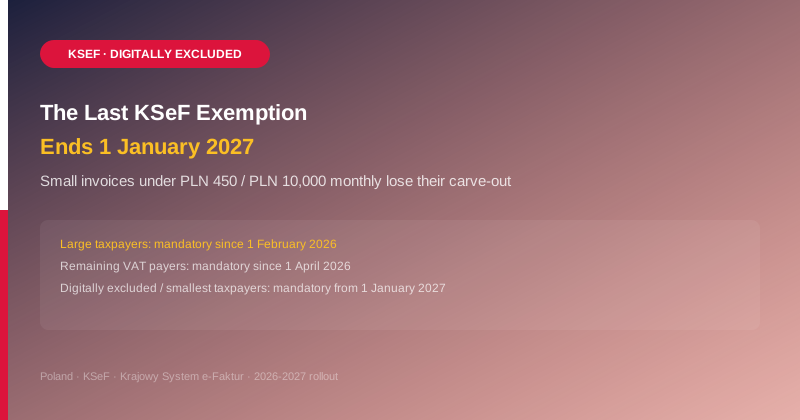
This legislation is distinct from — and should not be confused with — Slovakia's domestic eFaktúra (IS EFA) B2B/B2G e-invoicing mandate, which takes effect separately on 1 January 2027 via accredited "Digital Postman" intermediaries over Peppol (see our earlier coverage). The draft approved on 1 September addresses VAT registration and platform-liability rules under ViDA's Single VAT Registration and platform-economy pillars — it does not change Slovakia's e-invoicing timeline or format requirements.
Why This Matters Beyond Slovakia
ViDA's platform-economy and Single VAT Registration provisions apply EU-wide from 1 July 2028, but each member state must still transpose them into domestic law individually. Slovakia moving early — with a bill approved nearly two years ahead of the EU deadline — is a useful signal for businesses operating accommodation, transport, or cross-border distance-selling platforms: national implementation details will keep emerging country by country between now and 2028, and won't be identical everywhere despite the shared EU baseline.
What Affected Businesses Should Do Now
- Platform operators in short-term rental or passenger transport with Slovak-based hosts or drivers should start tracking which of those suppliers are VAT-registered, since the deemed-supplier rule shifts liability onto the platform for the others.
- Businesses using call-off stock arrangements into Slovakia should watch for the final text of the amendments, since documentation requirements may change.
- Don't conflate this with the 2027 eFaktúra mandate — they are separate obligations on separate timelines.
Source
VATupdate, "Slovakia Advances Draft Legislation Implementing ViDA and Import E-Commerce Rules".