Slovenia Passes ZIERDED Law: Mandatory B2B E-Invoicing Confirmed for 1 January 2028
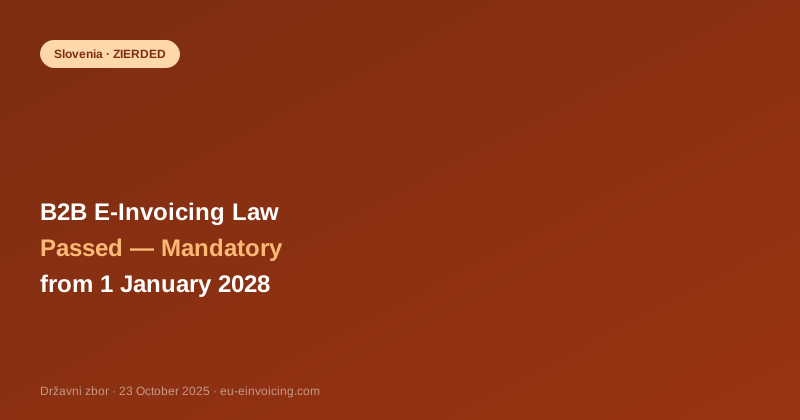
Slovenia's National Assembly passed the ZIERDED law on 23 October 2025, settling a mandate timeline that had shifted twice before: mandatory B2B e-invoicing between Slovenian businesses now takes effect 1 January 2028, on a decentralized exchange model rather than the earlier real-time reporting proposal.
Slovenia has joined the growing list of EU countries with a confirmed domestic B2B e-invoicing mandate — but getting there took two rounds of postponement first.
The Law: ZIERDED
Slovenia's Državni zbor (National Assembly) passed the Zakon o izmenjavi elektronskih računov in drugih elektronskih dokumentov (ZIERDED) — the Act on the Exchange of Electronic Invoices and Other Electronic Documents — on 23 October 2025. From 1 January 2028, all business entities registered in Slovenia's Business Register, plus self-employed individuals carrying out business activity, must exchange exclusively electronic invoices for domestic B2B transactions.
A Timeline That Moved Twice
Slovenia's mandate date has shifted before settling on 2028:
| Version | Proposed go-live |
| Original draft | 1 June 2026 |
| February 2025 revision | 1 January 2027 |
| **ZIERDED, as adopted (October 2025)** | **1 January 2028** |
The final, adopted version also dropped a feature from earlier drafts: a mandatory 8-day e-reporting requirement to FURS (the Slovenian tax authority) tied to every exchanged invoice. The law that passed instead uses a decentralized exchange model — invoices move directly between businesses or their service providers — without a blanket real-time reporting obligation to FURS built into this domestic mandate.
Required Format and Exchange
E-invoices under ZIERDED must be structured XML documents. Slovenia's existing e-SLOG 2.0 national standard is one accepted format, alongside other internationally recognized standards — earlier drafts and subsequent guidance have also referenced the Peppol network as a valid exchange channel, positioning Slovenia's technical approach similarly to Belgium's and Poland's Peppol-based domestic mandates rather than Italy's centralized SDI clearance model.
What Slovenian and Cross-Border Businesses Should Do
With 1 January 2028 now the confirmed date rather than a moving target, businesses trading with Slovenian counterparties have a firmer planning horizon than they did through 2025's back-and-forth. If you already have Peppol infrastructure in place for Belgian, German, or Polish invoicing, expect it to extend to Slovenian trading partners once implementing regulations and technical specifications are published — Slovenia has not yet released the detailed technical guidance that will confirm exact format certification requirements.
Source
Epos (Center za e-Poslovanje Slovenije), Državni zbor sprejel zakon ZIERDED: e-računi med podjetji obvezni od 1. januarja 2028; PISRS, Zakon o izmenjavi elektronskih računov in drugih elektronskih dokumentov (ZIERDED).